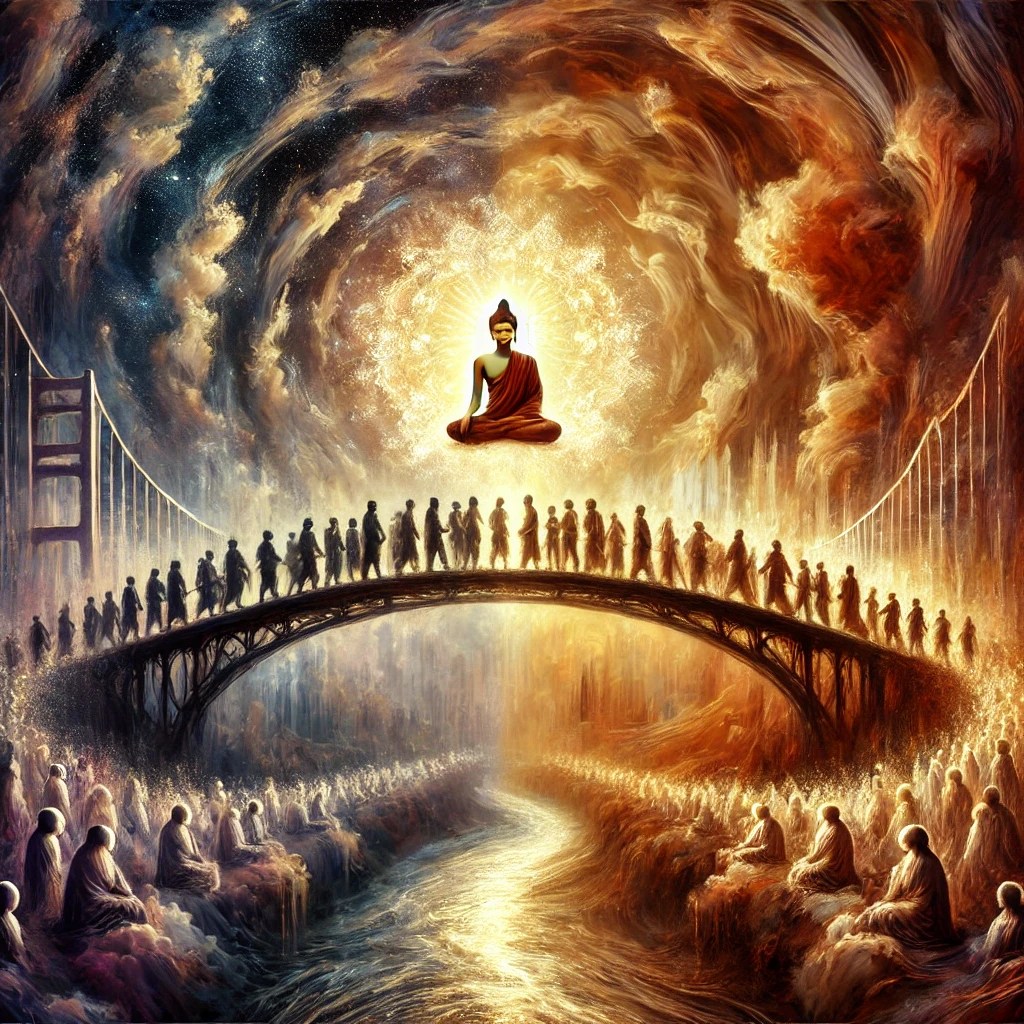
I’ve always been the middle man. Attempting to bridge the gap between oppositions, trying to find empathy where others see fault. My childhood put me into the role of, “double-agent” between my parents. My mother never had good things to say about my father, and her husband – my then stepfather – had even less to say. But there I was, fighting tooth and nail for every inch of humanity I saw in him – my father. I remember reciting to him every bad thing I heard. I saw the pain in his eyes. To hear the one thing he cared about – fatherhood – being insulted, it nearly broke him. But I downplayed it, told him she was just venting frustrations and didn’t really mean it. I tried, at every opportunity to mend the relationship; making up faux stories about the things my dad bought me, telling my dad that my mom thought his new job was cool – anything to keep the peace. But the bitterness, the deep, judgemental cancer grew – the attempted appeasements instead transmuted into new growths of disposition.
Even at twenty-three, I hear criticisms about his parenting, or lack thereof. It pains me, greatly. It wasn’t just due to the nature of the insult, being directed to my father. It’s the insinuation that, if he’d have done better, I would have become better. As if, somehow, I am below threshold, because I’m different, because I’m quiet, because I love to read, and write, and lack meaningful friendships with other “manly men.” It all hurts, but being a child who grew up in the condition of heightened anxiety, I’ve learned to compartmentalize it all.
Despite these attempts, I’ve learned that this has done me great harm. I’ve never truly developed a close relationship outside of my father. Everyone feels hostile to me – years of analyzing miniscule facial cues, slight changes in voice tone, and subatomic body language has rendered me overstimulated and hesitant to trust.
What others don’t understand is that I’ve lived in the minds of others. Every interaction is carefully read, analyzed, and documented. By the fifth or sixth interaction, I can somewhat accurately gauge when a person is irritated, stressed, anxious, happy, sad – you name it. I’ve also learned how to appease people very well. It’s a survival tool, one that I’ve learned and mastered to stay alive in this cruel world. It’s kept me safe for many years, but the downside is that few people truly understand me nor care to do so.
I’ve become invisible to most, a quiet and hard worker whose opinions appear to be either null or superseded by my personal drive. It more often than not, leads me to inevitable burnouts, bouts of depression, loneliness, existential anxiety, but most painful is identity crises.
So, I suppose I’m writing this because I’m suffering through a little bit of everything at the moment. Being a “bridge” archetype, means that people (mistakenly) look to me for wisdom and guidance, but the truth is that I have none. I’ll try to cite a few lines of wisdom I’ve learned through Buddhism, Daoism, Christianity, and literature. Truth be told, I am a mere idiot – a depressed one, at that. But the one thing I’ve always held firm to is that of love.
My father taught me love. He also taught me how to throw a baseball, cook a decent meal, sharpen a knife, catch a mean catfish, and be a patchouli-wearing hippy. I’ve been told my entire life that my father wasn’t a good parent, and that’s an easy thing to project upon someone. But the greatest thing a parent can teach you is something that stays true through the hardest times. Love has always prevailed, even in my darkest moments. It won’t be long before I have to put down this laptop and venture back into the cold, disposed world that we live in. But watching my father respond to years of harsh criticism with love and compassion made me realize that love is the only way to make sense out of this fucked up world.
But seriously, why am I really writing this? I’m writing this because we as humans are heading into our own crafted hellscape. I’ve seen it my entire life, the human condition is diametrically opposed to love. We’re constantly competing for resources, not just to survive, but to feed our egos. Resources of status and excess wealth have become virtues to achieve – and yet, those who gain such resources hoard them. It is, after all, their money, their hard work. You see, people live on islands without bridges. We see ourselves as isolated subjects in a world of self-determination. As children, we’re scolded to “worry about yourself,” and to, “mind your own business.” And yet, this seems to be paradoxical by nature. We, in fact, do not live in a world where the “self” can simply “mind its own business.” We are a web of consequence which works in a complex manner of strings to support each other.
The fictitious idea that we can somehow exist independently of others is a complete fabrication. We all too often allow our ego to supersede our ability to reach out and have compassion for others. We judge them as “lazy,” “stupid,” “entitled,” or whatever other adjective pronoun we can assign to their character. I saw this first hand with my father, a man who has never meant me any harm, who has loved me as any good person would their child. And yet, my very own family has been blind to the harm it has done, not just him, but me.
I do not pose my personal narrative as merely a way to vent, but to highlight the fact that these judgements are not in good faith. To frame a person of misfortune as “lazy” or “stupid” implies more than it means at face value. It is a reflective statement which translates to your own failing as a member of this interconnective web – a web in which you have benefitted from, and have chosen to use your gifted power to give judgement, rather than compassion.
I would like to end by stating that this is not a piece of shame on those who pass judgement. That would, of course, be antithetical to the point I’ve made. I, myself, am far from innocent in this. My point is that we are all victims of judgement and egoistic tendencies, but in so being the victim, we must not impose aimless revenge when given the opportunity. This is a race built on the bridge of altruism. A bridge which – like myself – has been relentlessly bombarded by a river of alienation, egotism, and pain. But to see the pain I’ve experienced in others, and to give them comfort in a moment of compassion, allows me to understand that love is the only cure to our pains.
 Ashton Writes